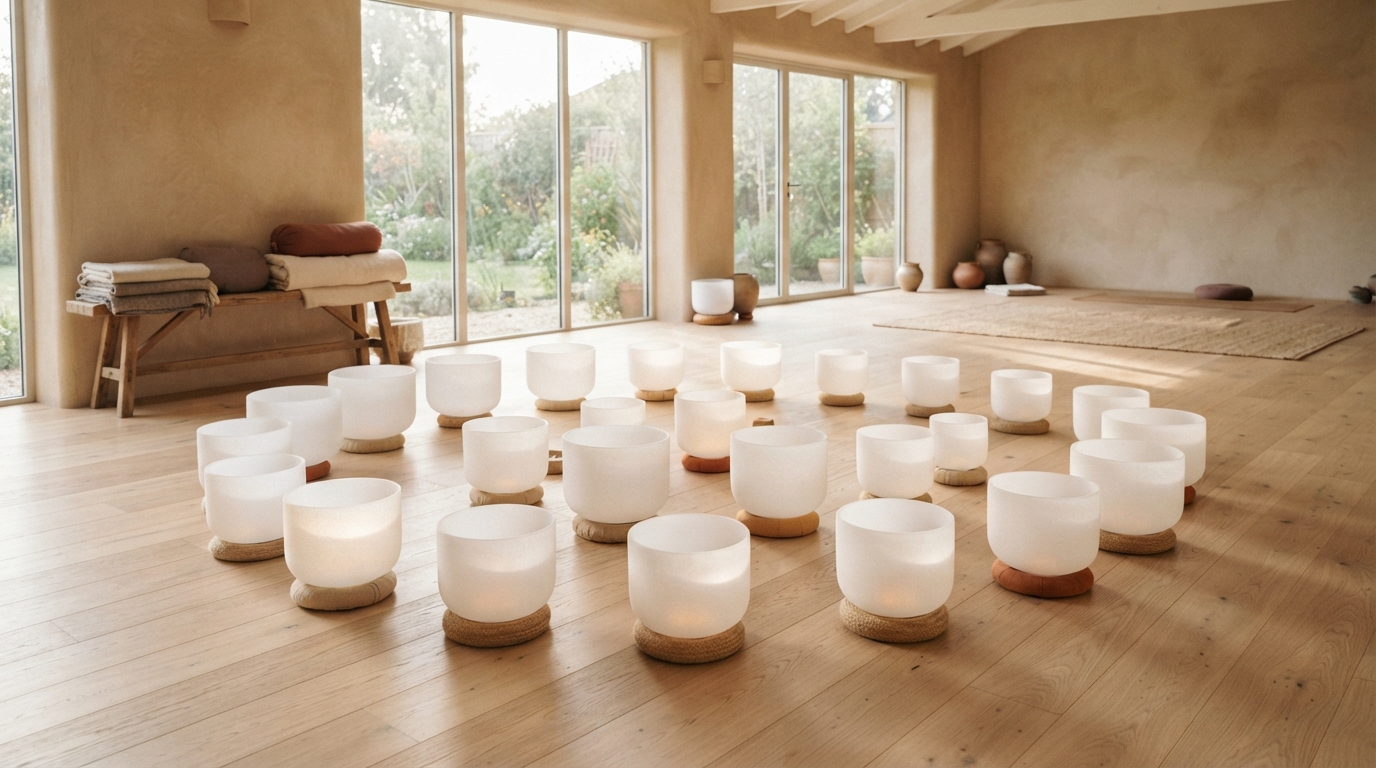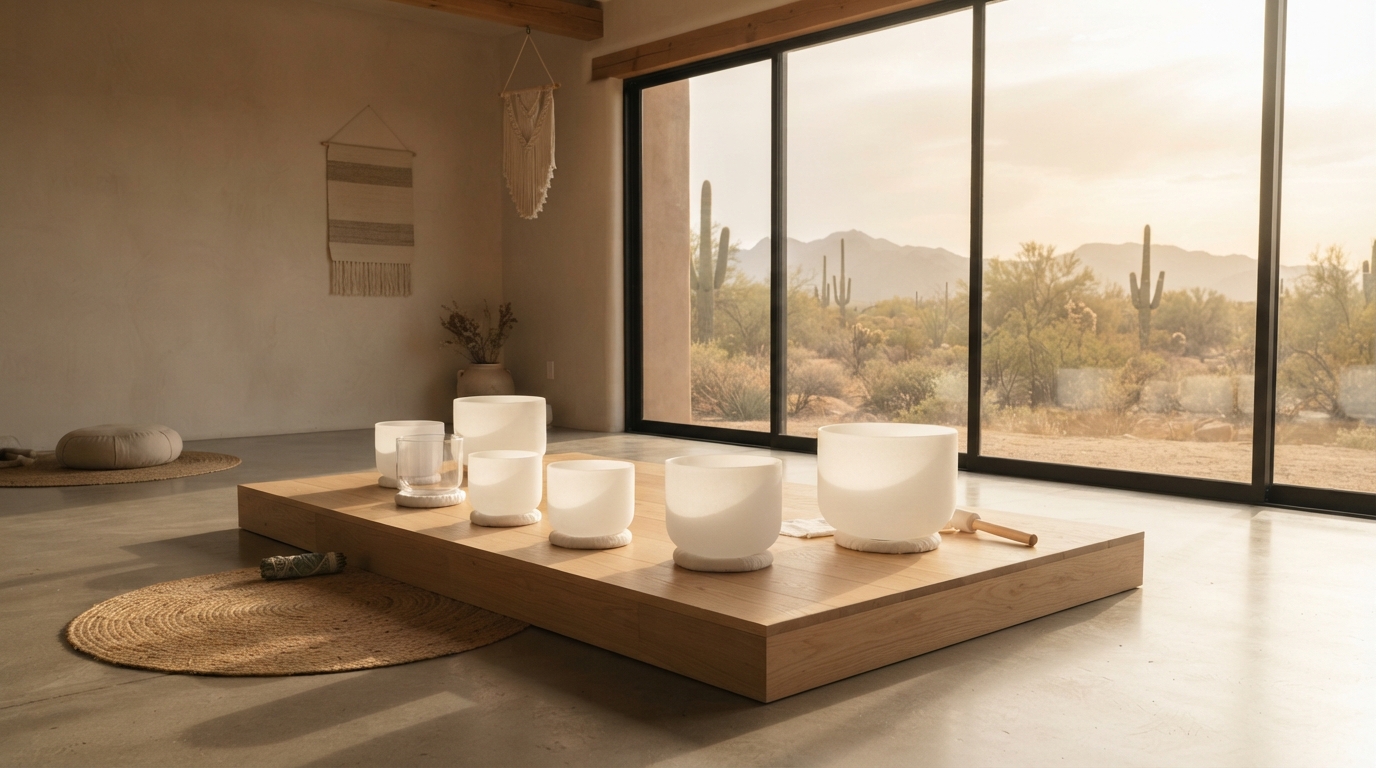
The desert landscape of Scottsdale offers a unique backdrop for wellness, where the stillness of the Sonoran heat often creates the perfect environment for deep reflection. As yoga teachers and studio owners, many of you are looking for ways to deepen the experience for your students, moving beyond the physical flow into the realm of subtle, restorative resonance. Integrating a sound bath for a yoga studio is one of the most effective ways to transition a group from the active "yang" of a vinyasa class into the introspective "yin" of final savasana.
Why Incorporate Sound
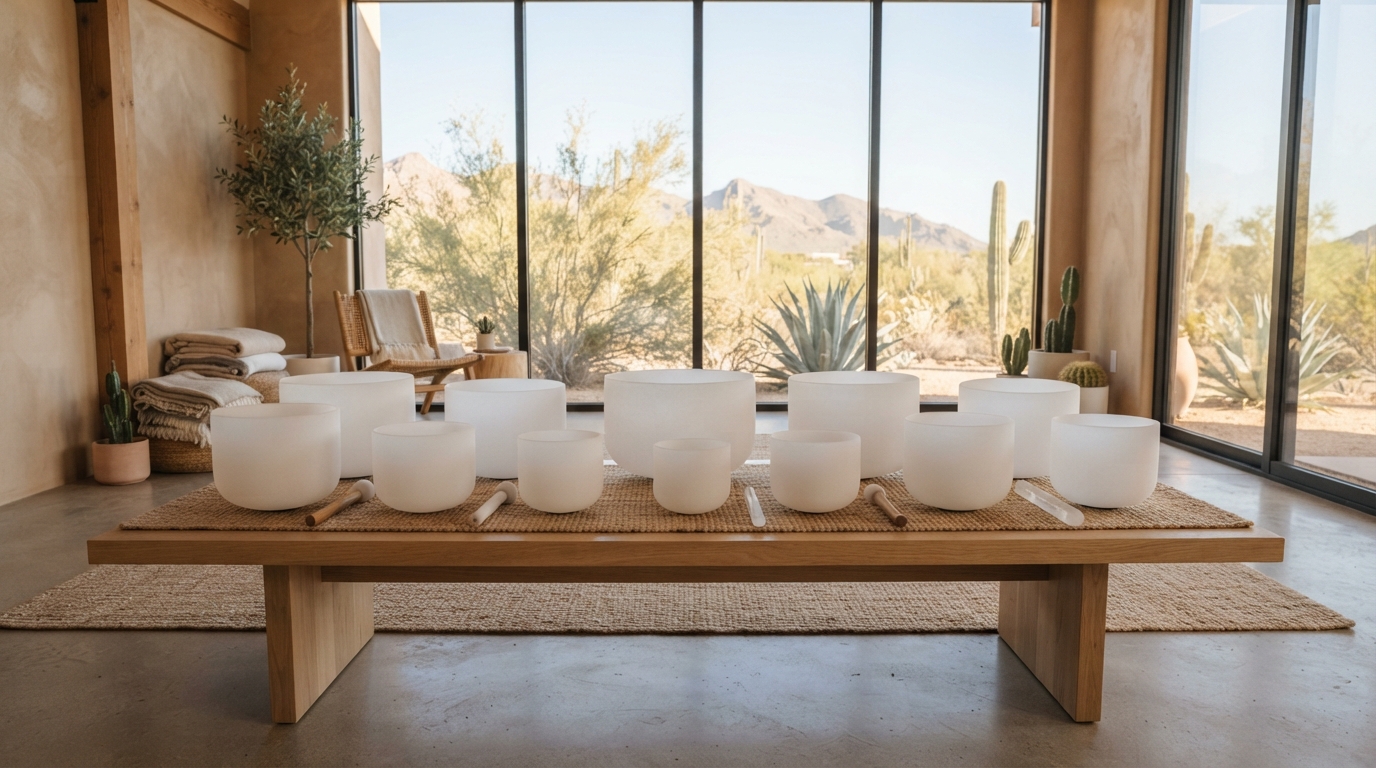
At its core, a sound bath is an immersive listening experience that encourages the body and mind to settle into a state of deep relaxation. When you introduce crystal singing bowls, you are essentially introducing a geometric, coherent frequency into the room. Quartz crystal bowls, like the ones crafted by Crystal Tones, are tuned to specific notes ranging from C to B. Each of these notes is associated with one of the seven primary energy centers in the body.
When you host a sound bath, you aren’t just playing music; you are providing a structural framework of sound that helps students anchor their focus. This is particularly valuable in a yoga studio setting where the "monkey mind" can often prevent students from fully dropping into their practice. The resonance of a high-quality bowl helps quiet the internal dialogue, allowing for a more profound sense of grounding after the physical exertion of yoga.
“As yoga teachers and studio owners, many of you are looking for ways to deepen the experience for your students, moving beyond the physical flow into the realm of subtle, restorative resonance. Integrating a sound bath for a yoga studio is one of the most effective ways to transition a group from the active "yang" of a vinyasa class into the introspective "yin" of final savasana..”
Selecting Your Instruments
Choosing the right bowl for a studio environment can be overwhelming, but it helps to think about the physical space you are working with. If you are aiming to fill a large studio in Scottsdale with a rich, foundational sound, larger bowls ranging from 10 to 14 inches are ideal. These larger instruments produce deeper, room-filling tones that seem to vibrate through the walls and floors, providing a "sonic massage" that students can feel as much as they hear.
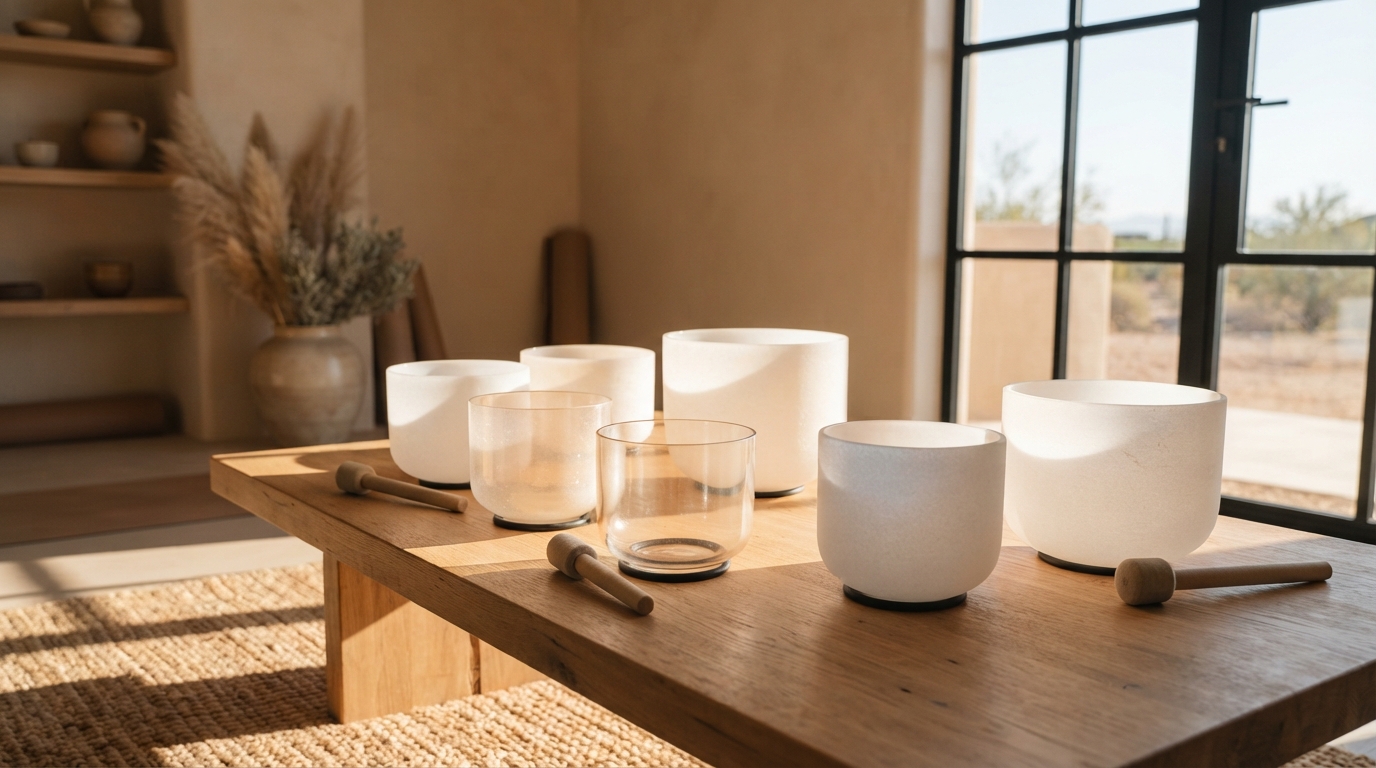
Conversely, if you are looking to cultivate a more personal practice or are holding intimate sessions in a smaller studio room, 6- to 8-inch bowls are excellent. Their higher pitch is often described as crisp and ethereal, which works beautifully for guided meditations or focused breathwork. At Alchemy Acoustics, we specialize in alchemy bowls infused with elements like rose quartz, amethyst, platinum, gold, or moldavite. These infusions add a beautiful aesthetic layer to your studio space, but more importantly, they offer distinct tonal qualities that can help you tailor the "vibe" of your class—whether you want a heart-centered session using rose quartz or a grounding, stable frequency provided by gold-infused bowls.
Building A Studio Collaboration
Collaborating with external practitioners is a fantastic way to refresh your studio’s offerings without requiring your current teaching staff to learn a new discipline from scratch. A partner sound healing event creates a sense of occasion; it turns a standard Tuesday night class into an "event" that your students will look forward to.
When looking for a partner, consider these points to ensure the collaboration is seamless:
- Space Requirements: Ensure the practitioner has enough room to lay out their set of bowls safely, away from high-traffic areas.
- Acoustic Quality: Some studios have beautiful hardwood floors that reflect sound, while others have mats and props that absorb it. A good practitioner will know how to adjust their playing style to suit the acoustics of your specific room.
- Thematic Alignment: Pair the sound bath with a specific yoga focus—for example, a restorative yin class paired with deep, earth-tone bowls, or a solar-charged vinyasa flow followed by higher-pitched, clarifying quartz frequencies.
Logistics and Setting the Scene
In our local Scottsdale community, where wellness is a lifestyle, students have high expectations for the sensory environment. The Sonoran Desert is known for its intense sunlight and dry air, which can make the transition into a cool, dim, and acoustically resonant studio space feel like a sanctuary.
When hosting, ensure your studio is prepped for sound:
- Temperature Control: Sound baths are restorative; students will cool down quickly while lying still. Ensure the studio is kept at a comfortable, warm temperature.
- Visual Decluttering: The beauty of crystal singing bowls is their elegance. Keep the area around the practitioner clear of extra equipment so the bowls can stand out as the focal point.
- Scheduling: Allow 10 to 15 minutes of transition time between your regular yoga class and the start of the sound bath so students have time to gather blankets, bolsters, and pillows. Comfort is essential for the student to remain still enough to fully receive the sound.
Getting Started
Whether you are interested in acquiring your own set of bowls to lead your own sessions or you are looking to hire a professional to bring the Alchemy Acoustics experience to your studio for a special event, we are here to support your mission. We invite you to reach out to our team at our Scottsdale studio at 9393 North 90th Street, Suite 106. We offer complimentary private bowl viewings where you can play the bowls yourself and feel which frequencies resonate with your specific studio space. Book a private viewing or inquire about our off-site sound bath services today to bring a new layer of restorative harmony to your community.